Generic selectors
Exact matches only
Search in title
Search in content
Post Type Selectors

Category: Announcements

Gene Brody and colleagues awarded a NIDA P50 Center of Excellence grant

Gene Brody
Photo by Amy Ware

A $10 million NIH grant will continue work studying rural Black families

Growing up in poverty and experiencing racial discrimination can affect physical health, and researchers at the University of Georgia have been awarded a $10 million grant from the National Institutes of Health to explore how.

Building on previous research in this area, the grant establishes a P50 Research Center of Excellence led by Gene Brody, a Regents’ Professor in the Owens Institute for Behavioral Research and director of the Center for Family Research. Brody and his team will continue their work studying rural Black families, the challenging circumstances they experience, and the health disparities that result.

Growing up in poverty is a powerful variable that forecasts all facets of development— particularly health—throughout a person’s life, according to Brody’s research. In the United States, he said, 20% of all children live near or below the poverty line, and the figures are higher for rural Black youth, whose poverty rates hover around 50%.

Life span differences

“Because many Black children live in economic hardship, they’re at elevated risk for health problems across their life span,” said Brody, principal investigator for the grant. “They are more likely to have shorter life spans than white residents who grow up in the same places.”

Brody’s team, which includes co-investigators from UGA and Northwestern University, will build on 15 years of research funded by previous NIH Center of Excellence awards to advance next-generation research of risk, resilience and health among Black young people living in the southeastern United States.

The grant will fund studies to address three questions:

  • How does economic hardship affect the immune system and the functioning of brain circuits that influence health and well-being?
  • Can prevention programs protect Black youth from the deleterious effects of poverty and racial discrimination on their immune systems and neural circuitries?
  • How are health risks in the immune system and in the brain transmitted across three generations, and what shields children from the transmission of health risks from one generation to another?

It will also provide a mentoring program for early career scientists, who will work with more experienced researchers from prevention science, neuroscience, health psychology/immunology, developmental psychology, clinical psychology and biological anthropology. The center will serve as a national resource for several groups: Black families who want to shield their children and adolescents from the health effects of stress; scientists interested in studying health disparities; and public health practitioners who are developing prevention programs for young people.

At UGA, co-investigators for the P50 grant include Steven Beach, professor in psychology and CFR co-director; Brett Clementz, professor in psychology; Katherine Ehrlich, assistant professor in psychology; Steven Kogan, Athletic Association Professor of Human Development; and Lawrence Sweet, Gary R. Sperduto Professor in Clinical Psychology.

Additional co-investigators include Edith Chen, Tom McDade, Greg Miller, Robin Nusslock and Todd Parrish, all at Northwestern University, and Michael Windle at Emory University.

We take that (research) information and use it to inform the development of prevention programs for rural Black children and youth and their families.” — Gene Brody

The Center for Family Research was founded 35 years ago to bring together scholars from diverse disciplines to explore innovative and dynamic ways of examining family life. Scientists at CFR conduct basic research involving rural Black families and children to understand why many families and children are resilient despite living in very challenging conditions.

“We take that information and use it to inform the development of prevention programs for rural Black children and youth and their families,” Brody said. “These programs that we’ve tested in randomized clinical trials and have shown to be effective are now being disseminated around the nation. Families from Harlem, New York, San Francisco, Washington, D.C., Chicago, Pittsburgh, Selma, Mobile and places in between are participating in these prevention efforts.”

The center’s Strong African American Families Healthy Adults Projects began collecting data from nearly 500 Black children living in the rural Southeast in 2008 and has followed up with these children as they entered young adulthood, focusing on self-regulation, physical health and substance use patterns. Recent research has included biological markers and identified what Brody calls “skin-deep resilience”—high functioning on the surface that masks the deterioration of physical health, including a higher propensity for risk factors that predict heart disease, diabetes, stroke and cancer later in life.

CFR receives support from the National Institute of Child Health and Human Development, the National Institute on Alcohol Abuse and Alcoholism and the National Institute on Drug Abuse, among others.

Article written by: Allyson Mann
Source: UGA Today

CFR Research Featured in UGANEWS

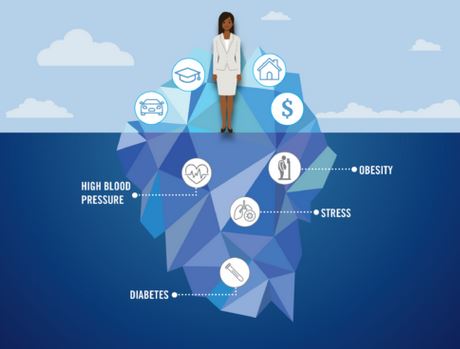
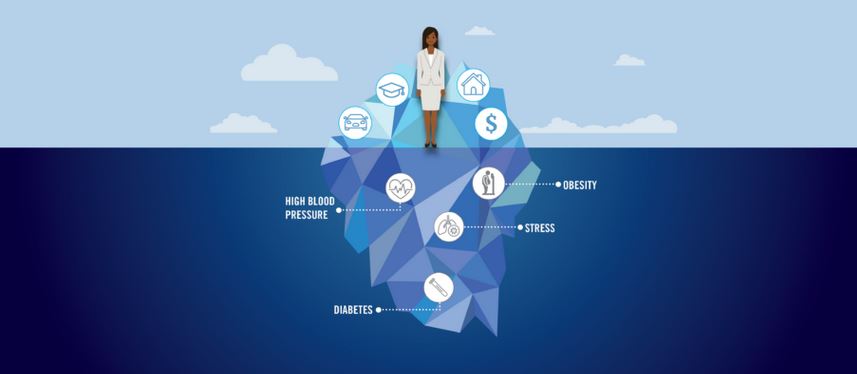
A woman stands on top of an iceberg, with icons above water showing social factors and below water showing diabetes, high blood pressure, obesity, and stress.

Can striving for success cost Black Americans their health?

Successful Black adults in their 20s were more likely to have risk factors

The American dream of achieving prosperity requires hard work and sacrifice, and some Americans pay a higher price for that dream than others, according to a new study from University of Georgia researchers.

A team led by Gene Brody found that Black young adults who grew up amid economic hardship and exposure to racial discrimination experienced physical deterioration that persisted through adolescence and well into adulthood—even though on the surface, they were successful.

Brody calls this “skin-deep resilience.” A person may look successful on the surface, he said, but evaluations of physiological functioning—what’s happening beneath the skin—are necessary to get a true picture.
Risk factors

“Black adults develop the chronic diseases of aging—heart disease, high blood pressure, stroke, diabetes, some cancers—at earlier ages than do white adults. Up till a few years ago, we thought these diseases developed during middle age,” said Brody, a Regents’ Professor in the Owens Institute for Behavioral Research and director of the Center for Family Research. “In fact, their origins take place earlier. Our team has found that Black young people who grow up in economic hardship are more likely at the end of the adolescence to show risk factors for later chronic diseases.”

In the study, published in Health Psychology, the researchers found that a group of successful Black adults in their late 20s were more likely to have insulin resistance—a primary risk factor for the development of diabetes—and components of metabolic syndrome, a cluster of risk factors that predicts cardiovascular disease, stroke, cancer and earlier mortality.

We found that having this pattern of above-the-skin resilience but below-the-skin deteriorating health was most likely to be found for kids who had to fight their way out of poverty to achieve success.” — Gene Brody

Brody and his team first began working with the group, which included 489 Black children aged 11 from rural Georgia, through CFR’s Strong African American Families Healthy Adults Projects. Despite living in challenging circumstances, including economic hardship and exposure to racial discrimination, the children were reported by their teachers to be doing well based on evaluations of academics, friendships and emotional/behavioral issues.

Eight years later, when the kids were 19, the researchers found that they still appeared to be successful, as reflected in less drug use, lower levels of depressive symptoms and enrollment in college. But blood tests revealed higher blood pressure as well as higher levels of stress hormones, inflammation and obesity.
Affecting health

The new study assessed the group at age 27 and found the persistence of skin-deep resilience. These young adults were more likely to have earned college degrees and less likely to be depressed or have behavioral problems, but blood tests revealed they were more likely to have insulin resistance and components of metabolic syndrome.

“We found that having this pattern of above-the-skin resilience but below-the-skin deteriorating health was most likely to be found for kids who had to fight their way out of poverty to achieve success,” said Brody, who was appointed Regents’ Professor in 2004. “We have found it mainly for Black children, whose quest to succeed is more difficult, given circumstances like discrimination and poverty, than it is for white children.”

The researchers will evaluate these young people next in 2021. The SHAPE program has been continually funded by the National Institutes of Health since 1989.

Co-authors include Tianyi Yu, assistant research scientist and statistician at CFR, and Edith Chen and Gregory E. Miller, both of Northwestern University.

Article written by: Allyson Mann

Source: UGA Today

Dr. Ronald Simons named Regents’ Professor 2020

Dr. Simons studies the processes by which social experiences become biologically embedded and influence mental and physical health outcomes. His research suggests that social factors, such as marital, work, financial and social status variables, impact biological aging and the development of chronic illness more so than the effects of diet, exercise, body mass index, smoking and other known health-risk factors.  He has published more than 240 peer-reviewed articles, and his research is supported by grants totaling more than $45 million, including awards from the National Institute on Aging, the National Institute of Mental Health, the National Institute for Child Health and Human Development, and the CDC. His research articles have generated more than 33,000 citations.  Dr. Simons is a Fellow of the university’s Owens Institute for Behavioral Research and co-directs the institute’s Center on Biological Embedding of Social Events and Relationships. He received the 2019 Southeastern Conference Faculty Achievement Award and is a Fellow of the American Society of Criminology. His publication awards include Best Article of the Year from three professional organizations for three different articles published in flagship journals. He also serves regularly on National Institutes of Health review committees.

“Dr. Simons is an unusually prolific scholar, with dozens of published papers to his credit that attest to his unstinting commitment to understanding a host of complex questions about families, child well-being and the circumstances in which families develop and change,” said Thomas N. Bradbury, Distinguished Professor of Psychology at the University of California, Los Angeles. “There is really no way forward in our field without this kind of sustained, scholarly focus on topics of great social significance like these.”

Click here to read the full article by UGA Today!

Ron Simons

Dr. Steven Kogan awarded the William A. Owens Creative Research Award 2020

Steven M. Kogan is the UGA Athletic Foundation Professor of Human Development in the department of human development and family science in the College of Family and Consumer Sciences. Kogan’s research investigates important stressors that drive risky behaviors and mental health challenges among rural, Southern adolescent and young-adult African Americans, and then translates these findings into evidence-based family intervention projects. He undertakes longitudinal, quantitative modeling of the mechanisms that drive risky behavior across multiple levels and across time. Kogan’s research documents how community, family, genetic and psychological risk factors affect the well-being of young African Americans in general, and young men in particular.  His recent research examines whether family-centered interventions could be more effective if timed and implemented at crucial developmental transition points, creating real-world public health benefits by reducing risky behavior and substance abuse.

Click here for the full article by UGA’s Research Awards!


Steve Kogan