
Ron Simons

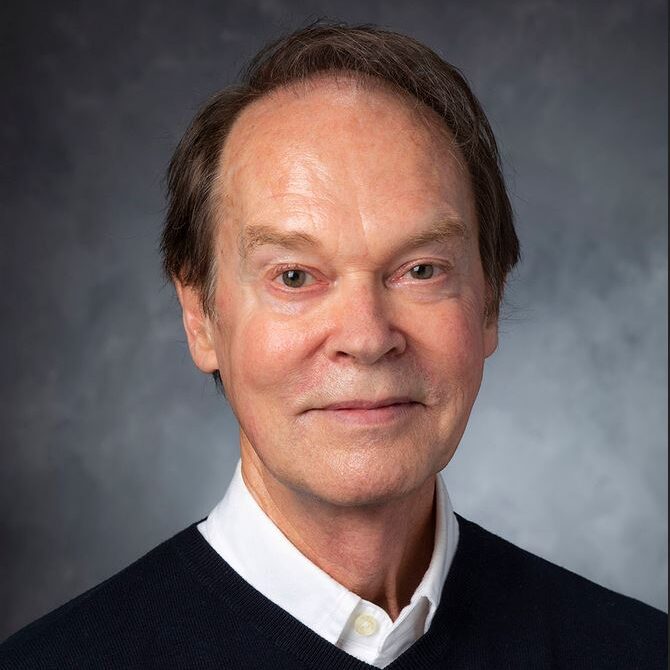
In Tribute
Dr. Ronald L. Simons
and His Lasting Contributions
to Science and Society
On March 31, 2025, the University of Georgia and the broader scientific community lost one of its most esteemed scholars with the passing of Ronald L. Simons, Ph.D. A Regents’ Professor in the Department of Sociology at the University of Georgia’s Franklin College of Arts and Sciences, Dr. Simons left behind a powerful legacy defined by academic rigor, groundbreaking research, and an unwavering commitment to mentorship. Over a distinguished career spanning decades, he transformed how scholars, clinicians, and policymakers understand the relationship between social life and human health.
Among those collaborations was work with many scholars at the Center for Family Research (CFR). CFR’s director, Steven Beach, Ph.D., says, Simons “was a researcher’s researcher. He was fully engaged and enthusiastic about his research questions and never forgot the deep values that informed them.”
Simons’ work focused on the intersection of sociology, biology, and public health, investigating how everyday social experiences shape mental and physical well-being over time. He pushed the field forward by emphasizing the often-overlooked role of social context. His work demonstrated that factors such as family relationships, occupational pressures, financial hardship, and social status can be profound predictors of long-term health and the onset of chronic illnesses.
In particular, his research explored how sustained exposure to stress, adversity, or social inequality can accelerate biological aging, thereby increasing susceptibility to conditions like cardiovascular disease, diabetes, and neurodegenerative disorders such as dementia. In doing so, Dr. Simons made critical contributions to the growing field of social genomics and epigenetics, blending sociological theory with cutting-edge biomedical science.
Over the course of his career, and often in collaboration with his wife and colleague, Leslie Simons, Ph.D., Simons published more than 300 peer-reviewed journal articles, amassing over 50,000 scholarly citations. His prolific body of work has become foundational for researchers across disciplines who study health disparities, life course development, and the long-term consequences of inequality.
His work garnered substantial funding over the years from prestigious institutions such as the National Institute on Aging and the National Institute of Mental Health. These grants supported large-scale longitudinal studies, many of which followed participants for decades, making Simons’ research not only influential but also remarkably durable.
In 2019, Simons was honored with the Southeastern Conference (SEC) Faculty Achievement Award, a distinction recognizing faculty members who have demonstrated outstanding records in both teaching and scholarship. A year later, Dr. Simons was named a Regents’ Professor—the highest academic title awarded within the University System of Georgia.
While his highly cited research has had tremendous impact on medical sociology, understanding family influences on the life course, criminology, and the importance of socio-economic status on lifespan development, his presence on campus has been equally impactful. Man Kit (Karlo) Lei, associate professor in the department of sociology, worked with Simons as both a student, and later, as a colleague.
“Ron was my academic role model and a father-like figure,” he said, adding that Ron used his own life, even while going through multiple rounds of chemotherapy, as a teaching tool. “Until the very end, [Simons] remained committed to his work—studying how social factors shape later life, especially for minority groups…I am incredibly proud to have been his student and colleague.”
Dr. Simons’ passing is a profound loss, but his legacy endures through the students he mentored, the colleagues he collaborated with, and the countless individuals whose lives are touched by the research he helped pioneer. His work has reshaped how we think about aging, health, and the long arm of social experience—and in doing so, has made the world not only more understandable, but also more just.
May his memory continue to inspire future generations of scholars to pursue research with both intellectual boldness and human compassion.